
Orbital Data Centres: A Hard, Forward Look at Market and Geopolitical Realities
ODCs will likely succeed as a computational backbone of the emerging space economy than as an alternative to terrestrial cloud infrastructure

Orbital Foresight | Issue 05 | 30 June 2026
Need to know more? AstroAnalytica provides bespoke decision support amidst growing space sector complexity and risk, along with strategic forecasting and advisory services for government, defence, investment, and industry clients.
LEAD ANALYSIS
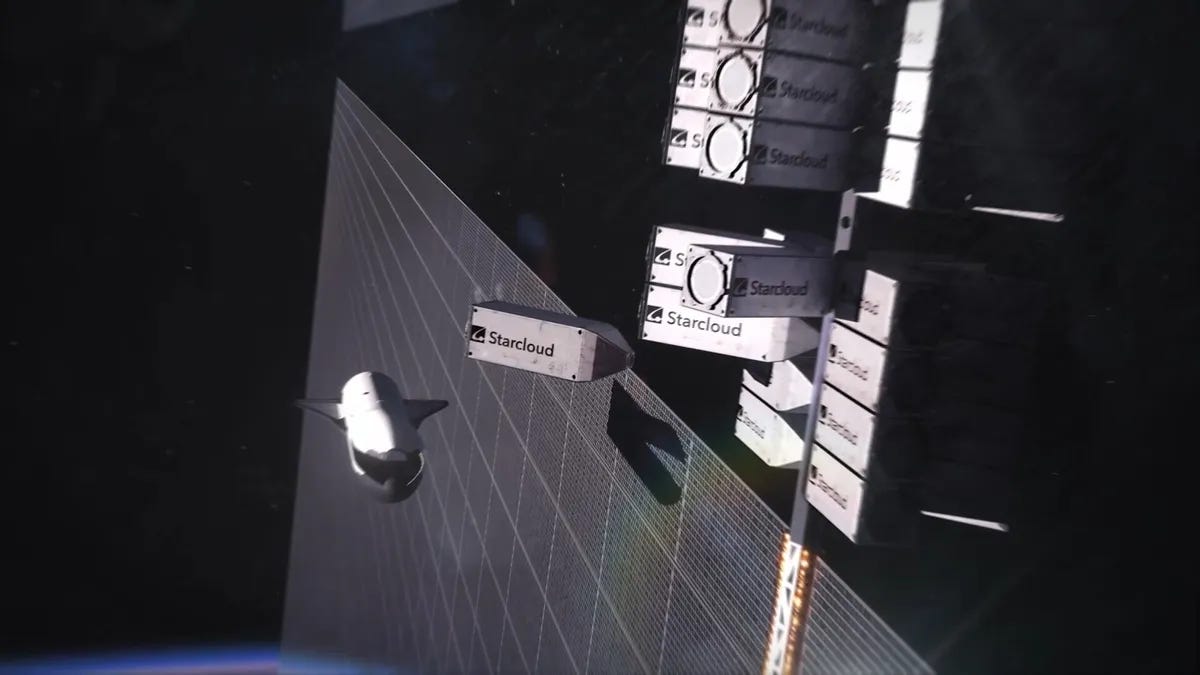
Over the past eighteen months, orbital data centres (ODCs) have evolved from an interesting engineering concept into one of the space sector’s most compelling strategic narratives. Advocates argue that artificial intelligence’s extraordinary appetite for electricity, cooling, land, and grid capacity makes the migration of computation into orbit not merely possible, but eventually inevitable. The narrative is both elegant and intuitively persuasive: AI demand is rising faster than terrestrial infrastructure can comfortably accommodate; data centres face mounting pressures from electricity costs, water consumption, planning restrictions, environmental regulation, and growing political opposition; while space appears to offer abundant solar energy, radiative cooling, and freedom from many of the physical and political constraints that increasingly shape infrastructure development on Earth.
That argument is not speculative or confined to niche corners of the space and AI sectors. It is being advanced by startups, analysts, researchers, and major companies such as SpaceX.
This AstroAnalytica analysis argues that the debate surrounding ODCs has been framed around the wrong question. Most discussion has focused on engineering feasibility, launch economics, and the environmental limitations of terrestrial data centres. Those are important issues, but they are not the decisive ones. The more fundamental question is whether ODCs are being compared with the right market in the first place. This is not primarily an engineering problem; it is a market-definition problem.
That distinction matters because the ODC industry risks making a familiar mistake, one that has recurred throughout the history of the commercial space sector. Again and again, emerging space industries have mistaken a large adjacent market for their own addressable market. The consequence is an investment narrative built around enormous Total Addressable Markets, ambitious infrastructure programmes, and optimistic growth projections, before sufficient attention has been given to identifying the specific customers, workloads, and commercial incentives that will sustain the underlying business. ODCs appear increasingly vulnerable to the same analytical trap.
This is not an argument against orbital data centres. On the contrary, we argue that their long-term prospects may be stronger than many current narratives suggest. But their greatest opportunities are unlikely to emerge from competing directly with terrestrial hyperscale cloud providers. Instead, they are more likely to arise as a new class of space-native computing infrastructure supporting applications and markets for which orbital execution provides a genuine economic, operational, or strategic advantage. That market is almost certainly smaller in the near term than many advocates imply, but it may also prove considerably more valuable, more defensible, and, ultimately, more investable.
The First Strategic Question
The way a market is defined determines the questions that investors, policymakers, and company executives ask about it. At present, the ODC debate is dominated by questions of engineering: Can ODCs be built? How much will they cost? When will they become economically viable? Can they compete with terrestrial hyperscale facilities? These are all legitimate questions, but they obscure a more fundamental one that has received remarkably little attention: what computing workloads are economically superior when performed by an orbital data centre?
The distinction is subtle but profound. Asking whether a workload can be performed in orbit is an engineering question. Asking whether it should be performed in space is a commercial and strategic one. Only when a workload is demonstrably superior in orbit, economically, operationally, or strategically, does it become part of the genuine addressable market for orbital computing.
This distinction has broader implications for the space sector. Commercial space stations have long been framed as serving tourism, manufacturing, research, media, and hospitality. In-space manufacturing has often been framed in terms of the global manufacturing economy. Reusable launch vehicles were initially discussed in the context of transforming access to all of space. In each case, engineering feasibility became intertwined with assumptions about the size of the eventual market. Yet history repeatedly demonstrates that infrastructure does not create demand simply because it exists. Rather, successful infrastructure emerges where clearly defined customer needs already exist or where entirely new capabilities create compelling reasons for customers to adopt them.
The central argument of this analysis is therefore straightforward. The orbital data centre industry should not be analysed as an extension of today’s global cloud market, but as the emergence of a new category of space infrastructure. Once viewed through that lens, the questions become different, the market becomes narrower, and the investment case becomes considerably more rigorous. Yet paradoxically, it also becomes stronger. […]
The complete version of this analysis available on the AstroAnalytica website.
DECISION SIGNALS
Recent developments that indicate significant strategic changes in the space domain with impact on government policies, investment choices and business decisions:
1. Rocket Lab's Expansion Signals the Rise of the Integrated Space Infrastructure Company
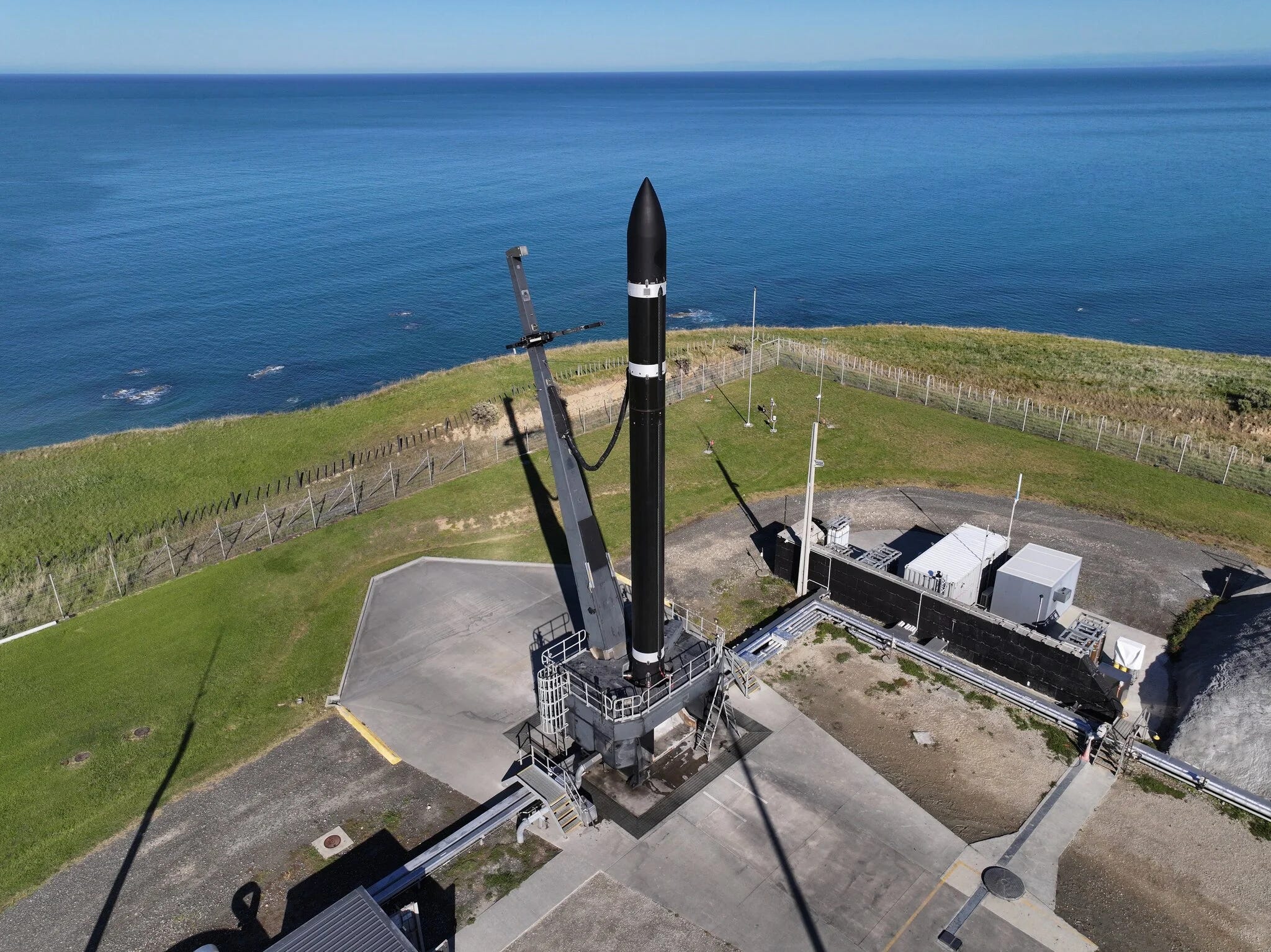
Rocket Lab has announced a major acquisition of Iridium Communications in a cash-and-stock deal worth approximately $8 billion comes only days after the successful launch of the U.S. Space Force’s Victus Haze mission and a tactically responsive launch campaign completed in under 17 hours. If completed, this transaction would confirm the emergence of a new type of space company, of which SpaceX had been a lone exemplar: one capable of controlling multiple layers of the orbital value chain simultaneously. Like SpaceX, Rocket Lab seeks to evolve from a launch provider into a broader space infrastructure company capable of supporting both commercial and national security customers across the full mission lifecycle.
Competitive advantage is shifting towards companies that can combine launch, satellite manufacturing, communications networks, software, operations, intelligence services and mission delivery within a single enterprise. Vertical integration is becoming a strategic capability rather than merely a commercial efficiency.
For governments, this raises important questions about future procurement. Defence customers increasingly require integrated capabilities that can deliver satellites, launch, communications and operational services at speed. Companies able to provide complete mission architectures may enjoy significant advantages over suppliers offering only individual components. The future competitive landscape may therefore be defined less by specialist manufacturers than by a relatively small number of integrated orbital infrastructure providers.
2. Europe's Sovereign Space Industry Continues to Consolidate
Several developments this week illustrate the continuing maturation of Europe’s sovereign space-security industrial base. German manufacturer OHB has secured additional capital to support expansion and acquisitions, while also deepening its partnership with Rheinmetall on the Bundeswehr’s SATCOMBw 4 military communications programme. Meanwhile, Finnish SAR operator ICEYE plans to double the capacity of its radar constellation by the end of 2027 in response to accelerating defence demand, and ESA Director General Josef Aschbacher has renewed calls for greater European strategic autonomy in space.
Taken individually, none of these announcements fundamentally changes Europe’s position. But together they reveal a broader pattern, at least from a business and programmatic point of view. Europe is increasing the speed with which it is assembling the industrial foundations required to support sovereign military space capabilities across communications, Earth observation, manufacturing and secure supply chains.
This direction of travel has been in some evidence for several years; now it is accelerating, crucially, as a matter of political priority. Russia’s invasion of Ukraine exposed Europe’s dependence on American space capabilities, while political uncertainty surrounding future U.S. security commitments has reinforced demands for greater strategic autonomy. European governments are increasingly investing not only in satellites themselves, but in the industrial capacity needed to design, manufacture, launch and sustain them over the long term.
It matters beyond Europe. A more capable European industrial base is likely to reshape defence procurement, investment flows and alliance relationships across the wider space sector. In space as in more traditional areas of defence and other key infrastructures, sovereign capability is increasingly becoming an industrial question as much as a technological one.
3. China Moves to Industrialise Very Low Earth Orbit
China has established a new national Very Low Earth Orbit (VLEO) Industry Alliance as several Chinese VLEO experimental spacecraft continue to demonstrate sustained operations at sub-300km altitudes once considered impractical for long-duration missions. At the same time, Beijing continues to broaden international space cooperation through BRICS while its reusable experimental spaceplane programme continues to perform, most recently releasing another unidentified object into orbit.
The individual announcements concern different programmes, but together they point towards an increasingly coordinated Chinese strategy for the next phase of orbital competition. Rather than focusing solely on building larger satellite constellations, Beijing appears to be investing simultaneously in new orbital regimes, reusable space systems, industrial coordination and international partnerships.
VLEO offers potential advantages in Earth observation, communications and military sensing owing to its proximity to the Earth’s surface — including greater resolution, signal latency — albeit at the cost of significantly greater engineering challenges. Establishing an industrial ecosystem around these capabilities suggests China increasingly sees VLEO as an operational domain worthy of sustained investment, rather than as some experimental niche.
Western strategic attention has understandably focused on the rapid growth of Chinese launch activity and emerging megaconstellations. Yet the more important trend may be the steady expansion of China’s capacity to shape future orbital infrastructure across multiple technological frontiers simultaneously. The next phase of space competition is likely to be determined not simply by who launches the most satellites, but by who succeeds in opening new operational environments first.
WEAK LINKS
Our regular look at vulnerabilities and chokepoints that impact risk across the space enterprise – military, civil, and commercial.
The Coming MEO Durability Gap
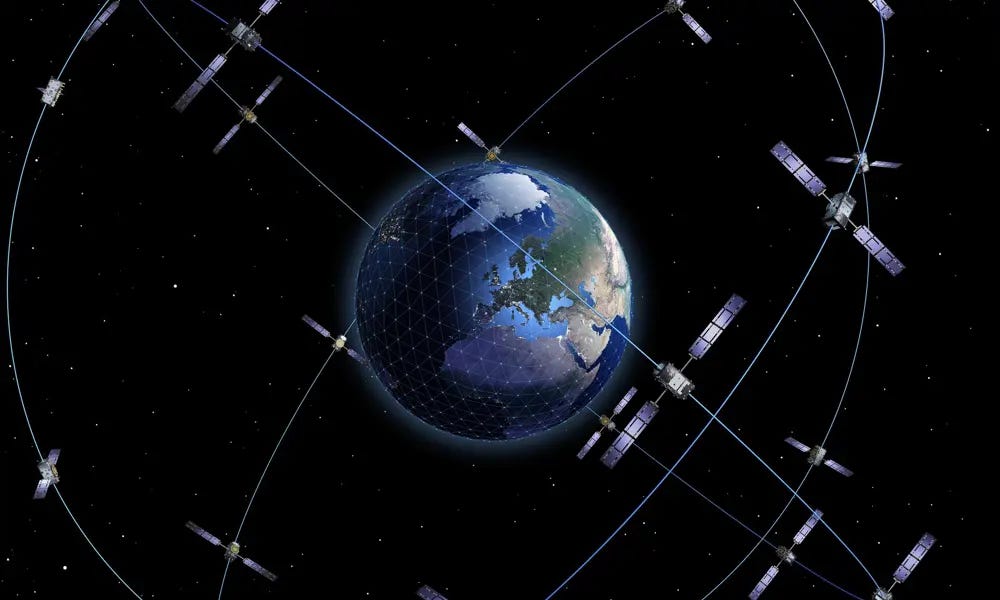
The space industry has spent the past decade largely focused on how to build and launch large numbers of relatively inexpensive satellites into low-Earth orbit. Increasingly, however, attention is shifting towards a more demanding operating environment. Medium-Earth orbit (MEO), where navigation constellations such as GPS, Galileo and BeiDou reside, is emerging as one of the most strategically important regions of near-Earth space. It is also one of the least forgiving.
A recent SpaceNews analysis argues that much of today’s commercial satellite hardware is simply not designed for long-duration operations in MEO. Radiation levels are significantly higher than in LEO, reducing component lifetimes and increasing the demands placed on spacecraft design, power systems and onboard electronics. As commercial companies look beyond Earth observation and broadband towards positioning, timing, secure communications and future cislunar infrastructure, engineering assumptions that have underpinned the LEO-oriented NewSpace revolution may begin to break down.
At the same time, recent reports of large-scale GPS interference stretching from Europe to South Asia serve as a reminder of how heavily modern societies depend upon the services generated from these higher orbits. Navigation satellites underpin financial transactions, telecommunications, military operations, aviation, shipping, energy networks and critical national infrastructure. Their strategic importance continues to grow even as their operating environment becomes more demanding.
The challenge is therefore not simply technical. If MEO becomes central to the next phase of the orbital economy, resilience will increasingly depend upon whether industry can produce spacecraft capable of surviving there reliably and affordably. One of the next bottlenecks in space may not be just launch capacity or investment capital, but the durability of the satellites themselves.
SPACE-THINK
AstroAnalytica’s spotlight on emerging space doctrine, spacepower theory and wider space strategic thinking that applies to all stakeholders across the space sector.
Responding to Hostile Acts in Space Requires More Than Deterrence
A new report from the Mitchell Institute argues that the United States lacks a coherent framework for responding to hostile activities in orbit that fall below the threshold of armed conflict. Rendezvous and proximity operations, reversible electronic attacks, cyber intrusions, dazzling, jamming and other forms of interference increasingly occupy a grey zone between routine competition and overt warfare, yet policymakers still lack clear guidance on how such actions should be interpreted and answered.
This is ultimately a governance problem as much as a military one. Space has entered an era in which strategic competition is increasingly characterised by ambiguity, incremental pressure and deniable coercion rather than dramatic acts of destruction. Deterrence therefore depends not only on possessing capable space forces, but also on establishing credible thresholds, response options and decision-making processes before a crisis occurs.
This debate is likely to become increasingly relevant beyond the US. As more nations develop military space capabilities, questions surrounding attribution, proportionality and escalation management will become central to responsible space power. Clearer understanding leads to better decisions, which strengthen deterrence and resilience. The countries that establish clear doctrines for operating in this grey zone are likely to enjoy important strategic advantages long before any conflict reaches the point of kinetic confrontation.
ON OUR RADAR
Other significant developments we have been tracking recently:
Japan's Air Self-Defense Force will become the Japan Air and Space Self-Defense Force, reflecting the growing institutional integration of the space domain into Japanese military planning. The renaming itself is largely symbolic, but symbols matter. Just as air forces emerged as independent institutions during the twentieth century, today's military organisations are increasingly recognising that space is no longer merely an enabling function but an operational domain requiring dedicated doctrine, personnel and command structures. Japan's decision reinforces a broader international trend in which space is becoming embedded across the armed forces rather than confined to specialist organisations.
The White House has signed an Executive Order intended to accelerate the development of quantum technologies, including quantum space infrastructure, recognising the strategic importance of quantum communications, sensing and secure networking. Quantum technologies remain at an early stage of maturity, but governments are already positioning them as part of the next generation of strategic infrastructure. Countries that establish early leadership in space-enabled quantum networks could shape future standards, industrial ecosystems and security architectures long before the technology reaches mass adoption.

Shield Space and ClearSpace have announced a partnership to develop technologies designed to protect satellites from hostile activity in orbit. The announcement reflects the continuing evolution of commercial space security. Until recently, satellite protection was largely the preserve of government programmes. A growing number of companies are now developing commercial capabilities for orbital surveillance, inspection and active protection. This points towards the emergence of an entirely new market centred not on building satellites, but on defending them.
The US Army is developing its own space-related capabilities and organisational structures, through a new Army Space Operations Branch. This development, which also includes explicit mention of “counterspace capabilities”, risks undermining some of the coherence achieved through the establishment of the US Space Force and could lead to duplicated investment, competing requirements, and reduced unity of effort across the US military in the space domain. It is a reminder — including to Allies — that the bureaucratic battle surrounding new military establishments can take a very long time to settle.
FROM ASTROANALYTICA
Orbital Foresight is produced by AstroAnalytica, a London-based geopolitical space intelligence firm focused on space power, strategic competition, and the future of the orbital economy.
We help governments, investors, defence organisations, and industry leaders understand how developments in space are reshaping power, risk, and opportunity.
To discuss strategic advisory support, research projects, speaking engagements, or partnerships, write to us at contact@astroanalytica.com.
Learn more about AstroAnalytica's research, analysis, and advisory services:
ORBITAL REFLECTION
Think of space as a chessboard where both sides get to preposition pieces prior to the start of the game, without full knowledge of the other side. Then either side can start the game at its own discretion by moving all its pieces at once. The rewards for going first, and the penalties or risks for going second, are very high.
All of this is a new dynamic and one that has not been explored or thought about very well at scale. Most war games and scenarios I’ve seen concern themselves with limited-scope and short-term attack scenarios—more like sniping or skirmishing than a full-out assault. The reality, I’m afraid, is that an adversary would move quickly and decisively, with surprise, if possible, to completely destroy all relevant adversary space-based capabilities. (Note that destroying capability is not the same as destroying assets.)
— Frank Kendall, Lethal Autonomy: The Future of Warfare Whether We Like It Or Not (Knox Press, July 2026)